In this Lecture, Sara added context to our Studio work by discussing her own work within the field of visualization of sound
The key ideas I got out of it (beyond the ones I came up with to try within my own project) is how the music and visuals need to reinforce one another. If the music is emotive in a particular way, the visuals need to reflect that, helping to sell the narrative of the music.
There needs to be a harmony between the two elements, or the dissonance needs to be thematic.
Showing posts with label Studio. Show all posts
Showing posts with label Studio. Show all posts
Tuesday, 26 January 2016
Monday, 18 January 2016
Visualization of Sound

For our newest project, we've been tasked with creating 8 pieces of unique and interesting visual responses out of 11 possible songs, trying to make the responses meaningful and thematic to the songs we're trying to visualize.
For this project, we are to include any number of techniques to create the responses, Including both moving and static pieces.
Because of the vast amounts of tools and techniques available, it's important to define what is and what isn't possible with the constraints Iv'e been given (two pieces a week)
Some of my ideas, right now include;
Rotoscoping myself dancing, seismology graphs, cymatics, kinetic typography, iconography, representing the data; and so forth.

Monday, 23 November 2015
Week 1: Experimentation
After going out into the world and getting a few ideas here and there, I felt I had finally got some ideas on how to develop the sets of research I had created, as well as some artists I had researched.
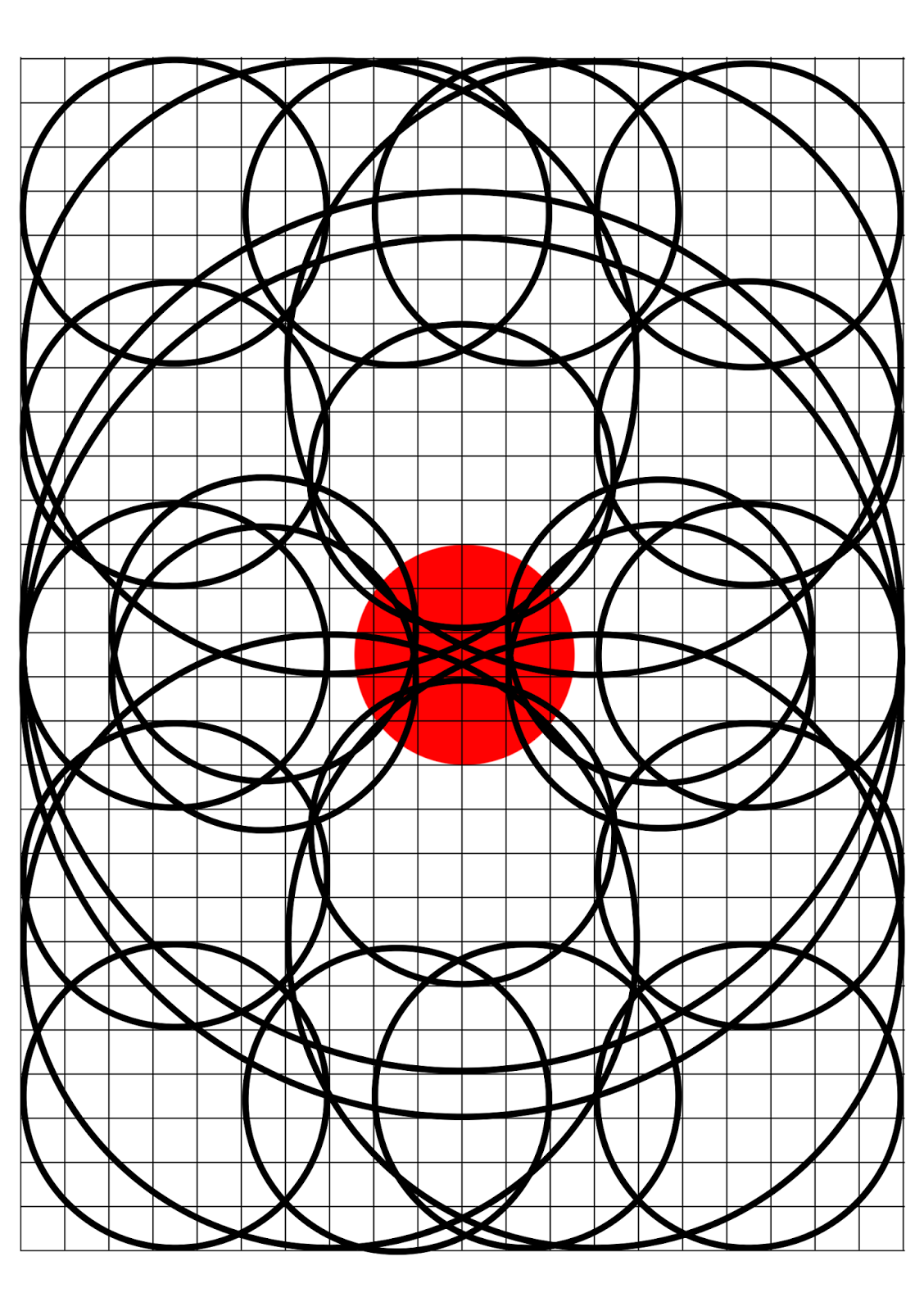
One of the first, and simplest experiments I decided to develop was using the grid system as a construct for generating form; using a grid to create an image with shapes, essentially.
Overall it was a simple affair, but very visually interesting and unique in its own regard.

The next set of experiments I created were in regards to frames, or rather; turning objects into frames with hand rendered elements, namely shoes (could I make a more fragmented sentence?)
The first one was a very simple experiment, imitating the traditional and analogue 'double exposure' technique digitally, using masking and blending in Photoshop to give, essentially, the same output.
The idea behind it was I could create a great sense of depth and meaning by containing one image within another, creating an image with almost a narrative to it.
The experiment itself went very well, though it wasn't executed perfectly, and the technique itself, whilst interesting on its own, is very overdone and lacked originality.

The next illustration was inspired heavily by the pieces of work produced by Steve Simpson, framing simple illustrations and typography within a bigger construct, often one relating to the elements within it.
The initial idea with this was that I could introduce new elements of hand rendered illustration that weren't present previously, helping giving my experimentations a greater range of diversity to them and, overall, I was pleased with both the execution of tracing the shoes and then the building the illustration, as well as the end outcome.


One of the first, and simplest experiments I decided to develop was using the grid system as a construct for generating form; using a grid to create an image with shapes, essentially.
Overall it was a simple affair, but very visually interesting and unique in its own regard.
The next set of experiments I created were in regards to frames, or rather; turning objects into frames with hand rendered elements, namely shoes (could I make a more fragmented sentence?)
The first one was a very simple experiment, imitating the traditional and analogue 'double exposure' technique digitally, using masking and blending in Photoshop to give, essentially, the same output.
The idea behind it was I could create a great sense of depth and meaning by containing one image within another, creating an image with almost a narrative to it.
The experiment itself went very well, though it wasn't executed perfectly, and the technique itself, whilst interesting on its own, is very overdone and lacked originality.
The next illustration was inspired heavily by the pieces of work produced by Steve Simpson, framing simple illustrations and typography within a bigger construct, often one relating to the elements within it.
The initial idea with this was that I could introduce new elements of hand rendered illustration that weren't present previously, helping giving my experimentations a greater range of diversity to them and, overall, I was pleased with both the execution of tracing the shoes and then the building the illustration, as well as the end outcome.
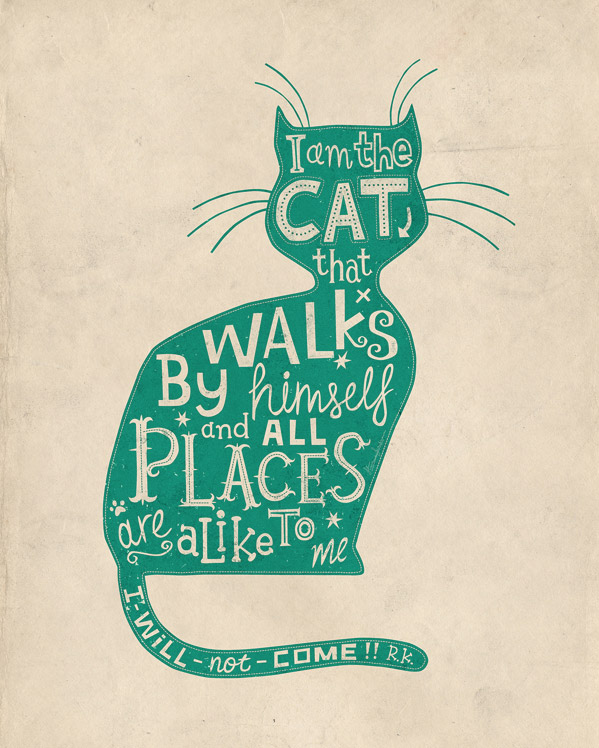
(Steve Simpson Inspiration)
Finally, whilst I did create a variety of 'Scale demonstrations', little illustrations to help explain ideas behind scale, I didn't feel they were worth mentioning here, as they ultimately weren't going to contribute to the final output of my project (though they are still present in my sketchbook for when these concepts are going to be introduced).
One set of experimentations I did produce for this week, however, were to do with micro-macro and I felt had a much stronger baring to the project and how I wanted to develop it.
Using a wide range of 'buzz words' that relate to a specific place, I wanted to construct a much loarger element, in the form of my shoe. This was done with the aim to give the hand rendered illustration a sense of depth and personal feeling, as each word was unique and helped bring together the overall picture. This is also something I tried to bring forward with my method, using a fine-liner to painstakingly trace and add each element by hand (which took a long time) just added to those previously mentioned elements, culminating in a set of pieces I was, overall, very proud with.


One set of experimentations I did produce for this week, however, were to do with micro-macro and I felt had a much stronger baring to the project and how I wanted to develop it.
Using a wide range of 'buzz words' that relate to a specific place, I wanted to construct a much loarger element, in the form of my shoe. This was done with the aim to give the hand rendered illustration a sense of depth and personal feeling, as each word was unique and helped bring together the overall picture. This is also something I tried to bring forward with my method, using a fine-liner to painstakingly trace and add each element by hand (which took a long time) just added to those previously mentioned elements, culminating in a set of pieces I was, overall, very proud with.
Friday, 20 November 2015
Week 1: Research
My first set of research was still rather unfocused initially, without any clear direction I decided to focus exclusively on the studio brief guidelines set in the initial project, namely; Grids, Frames and Micro Macro.
And whilst these experiments were initially unfocused, they ended up giving life two the two major ideas I would take forward to use in my final proposals.
Grids


These photos were taken with the intention of showing grid systems in play in the real-world, and how they essentially construct nearly all of the facets of our modern lives.
While not overly useful to my end project, it is at least good to touch ground and connect the secondary research I did into some more relevant, real world and primary examples.
Frame (where the good work is)

This work is a slight emulation of an experiment I saw completed in 'the new basics', regarding how pictures in picture frames were held up and photographed.
Because largely had no help when conducting this work, I needed to improvise a little...
Here, a picture in a picture-frame of an old age market, with the backdrop of a present day market behind it. This work is much more structured and related to an idea I had, regarding time and perspective in places.
Though, because of the limitations I faced (being the one man show I am) I feel improvements could have been made, such as a more purpose illustrated piece of art, or a more stable and processed photo-shoot.


(It should be noted, also, that all of these images are framed, in their own way, by the camera that took them, as the outer edge that the lens captured borders the image unlike our eyes would do, creating a frame around any photo or illustration created.
Micro Macro

And whilst these experiments were initially unfocused, they ended up giving life two the two major ideas I would take forward to use in my final proposals.
Grids
These photos were taken with the intention of showing grid systems in play in the real-world, and how they essentially construct nearly all of the facets of our modern lives.
While not overly useful to my end project, it is at least good to touch ground and connect the secondary research I did into some more relevant, real world and primary examples.
Frame (where the good work is)

This work is a slight emulation of an experiment I saw completed in 'the new basics', regarding how pictures in picture frames were held up and photographed.
Because largely had no help when conducting this work, I needed to improvise a little...
Here, a picture in a picture-frame of an old age market, with the backdrop of a present day market behind it. This work is much more structured and related to an idea I had, regarding time and perspective in places.
Though, because of the limitations I faced (being the one man show I am) I feel improvements could have been made, such as a more purpose illustrated piece of art, or a more stable and processed photo-shoot.

This is one of my favourite pieces, where I turned an object already present in the environment and turned it into a 'frame' for the photo I was taking.
The bin's 'frame' captured the high-street beyond it almost perfectly, and created the necessary borders to become its own frame.
The work itself is pretty self explanatory.

In this experiment I introduced frames that weren't already present to capture certain elements within an already framed image.
This allowed for a lot of experimentation and depth to be added to what might have otherwise been a stale image, as well as draw the viewers eyes directly onto what you want them to see, without having to crop away all of the potential image.
The only problem I have with this method is how broad the focus needs to be for it to work correctly, as well as the necessary element of the person holding up the frame, which frankly detracts from the overall image.
(It should be noted, also, that all of these images are framed, in their own way, by the camera that took them, as the outer edge that the lens captured borders the image unlike our eyes would do, creating a frame around any photo or illustration created.
Micro Macro

This experiment messed around with the concept of perspective, to create false senses of scale. In this way, I turned an object that may have otherwise been micro and positioned it in the camera as though it were macro.
This compositional relationship isn't perfect, however, as due to how extreme these differences in depth need to be to create the required effect, focusing on both (or even just one) subjects is next to impossible, without a purpose built lens (which I just don't have, I'm a student)
This effect, whilst visually interesting, also failed to truly convince someone a cigarette butt would me the same size as a bin, as we all know their actual sizes... but this doesn't mean the style is a complete waste of time.
Monday, 26 October 2015
Convergence and Conflict.
On Friday the 23rd of October, I had the opportunity to visit the Yorkshire Sculpture park, allowing for the opportunity to focus on the convergence and opposition present within the natural nature park, and the man-made elements within it.
These illustrations were created with a combination of fine-liners and coloured pencils, bringing in an element of colour that hasn't been present within my work thus far.
Convergence:


These illustrations were created with a combination of fine-liners and coloured pencils, bringing in an element of colour that hasn't been present within my work thus far.
Convergence:

This piece (as well as all of the other pieces created during this trip) used a lot of colour, exclusively colour, in this case. This illustration tried to capture the way the light hit one of the sculptures, using a pair of complimentary colours to emulate the warmth and coolness of the sculpture, and the way the light hit it.
I thought that, while a good exploration into the opposites of colours, the piece didn't have a great deal in terms of depth of interesting representation.
I thought that, while a good exploration into the opposites of colours, the piece didn't have a great deal in terms of depth of interesting representation.

This is a leaf. It fell on me whilst was doing a much better illustration and I figured 'why not?'
So this is a literal impression piece of a leaf that I made. It does capture the nature of the leaf and the colour is very representative of the leaf itself as, it's just a leaf.
I don't think this leaf is very interesting, but that's just me.

This is one of my more favourite pieces. It was created by observing objects present in the environment and sketching them loosely with a fine liner, then colouring them in ever more loosely with a coloured pencil.
These illustrations have a great deal of dynamism to them, and are very enriched by their colour (with the less is more mentality that a striking amount of little colour is perhaps better than just block colour)
These illustrations have a great deal of dynamism to them, and are very enriched by their colour (with the less is more mentality that a striking amount of little colour is perhaps better than just block colour)
Opposites:

While it may seem that, besides the two separate materials used to create this illustration, these two elements are in no way opposite to one another. And while the exclusive use of fine-liner on one element to sketch it, and pure coloured pencil on the other, gives an astounding amount of contrast and 'opposition' to the two pieces; the elements themselves are actually opposites too, with the hand being a living person's hand, and the poppy being made out of plastic and metal.
This piece is probably one of my favourites overall, if not simply because the hand is rather well drawn and captures something of a story in its presentation. I like how the two elements work with one another, as well as their execution in their materials.

This final piece is also amongst my favourites, as it too (I think) capture something of a narrative.
This illustration captures what I would do more than anything when coming to the Sculpture park; the clash between man and nature. Though I didn't think it'd be as blunt as this.
The security camera and light were drawn in fine liner, which I hoped would capture a sense of coldness and lifelessness, whilst the trees and nature behind it were all composed of more colourful and natural pencils, drawing a huge contrast and opposition between the two elements.
Subscribe to:
Posts (Atom)